
How Sleep Insufficiency Is Cutting Your Life Short
Image from Unsplash
At Gilman, and in America at large, sleep is treated as optional and secondary. However, research suggests that getting enough sleep is one of the key predictors of long-term health. A recent study published in the journal SLEEP Advances investigated the relationship between sleep insufficiency and life expectancy at the county and state levels. Students and adults have become all too willing to sacrifice sleep for productivity, and this study aimed to explore the connection between chronic sleep deprivation and life expectancy.
The study was conducted by McAuliffe et al., eight researchers at Oregon Health and Science University, and was published on December 8, 2025. The researchers aimed to determine whether there was a relationship between insufficient sleep and reduced life expectancy at an overall population level. They used government data from 2019 to 2025 to study trends at the county and state levels between the two factors. In the study, insufficient sleep was defined as less than 7 hours of sleep per night. The hypothesis was that counties with higher rates of sleep insufficiency would then have lower life expectancies.
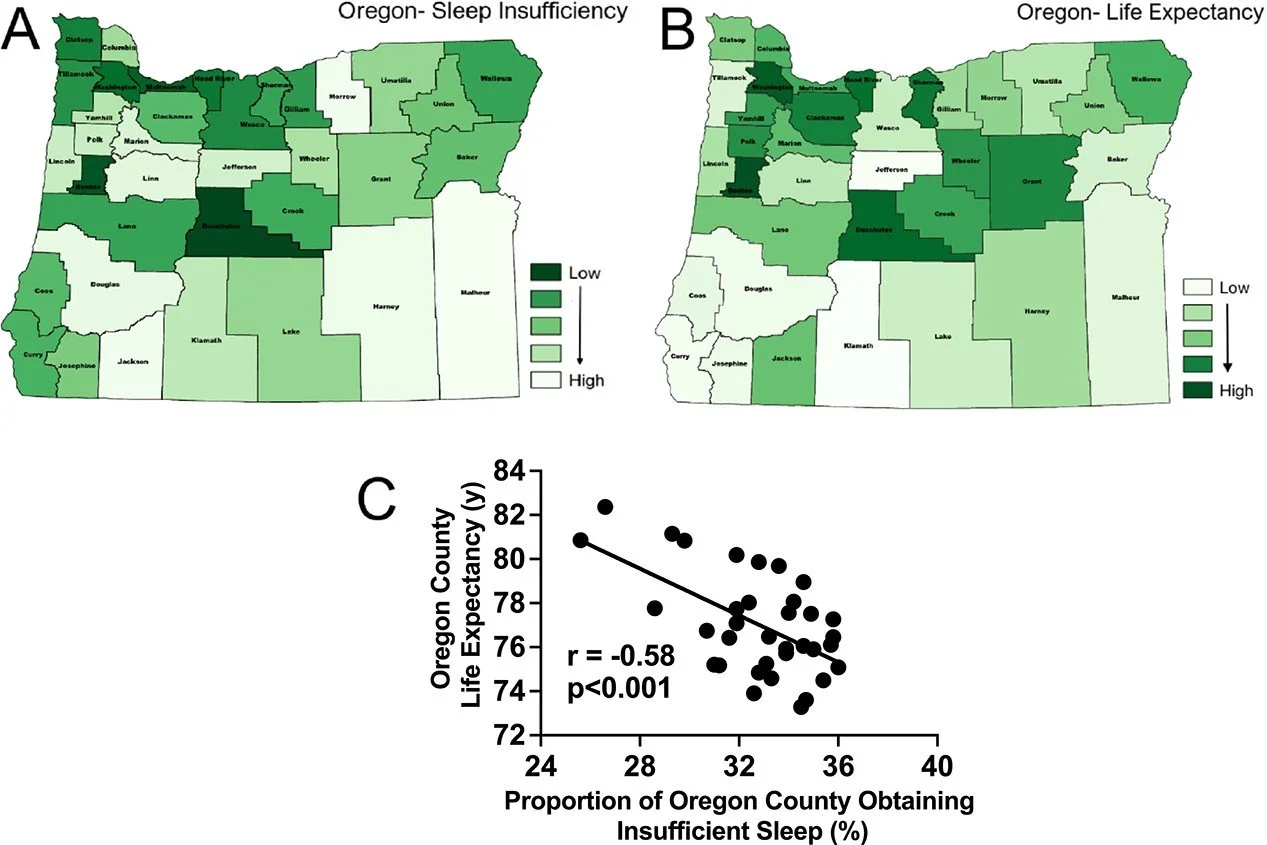
Sleep insufficiency rates and life expectancy were plotted for every county in a state (ex. Oregon). Then, statistical significance models were used to calculate the strength of the correlation between the two variables.
In every state, the percentage of a county was plotted against the county’s life expectancy. Then, all the counties were used as data points to evaluate the statistical significance at the state level. Importantly, the researchers controlled for what they described as “traditional predictors of mortality,” such as socioeconomic status, smoking rates, obesity prevalence, etc. Controlling these factors allowed the researchers to better isolate the relationship between sleep insufficiency and life expectancy after accounting for other known mortality predictors. Given that this study was done at a population level, this step was essential in maintaining any significance.
The results of this study revealed a consistent correlation between sleep insufficiency and reduced life expectancy across most states in the US. In general, the counties with higher rates of insufficient sleep had lower life expectancies, confirming the hypothesis.
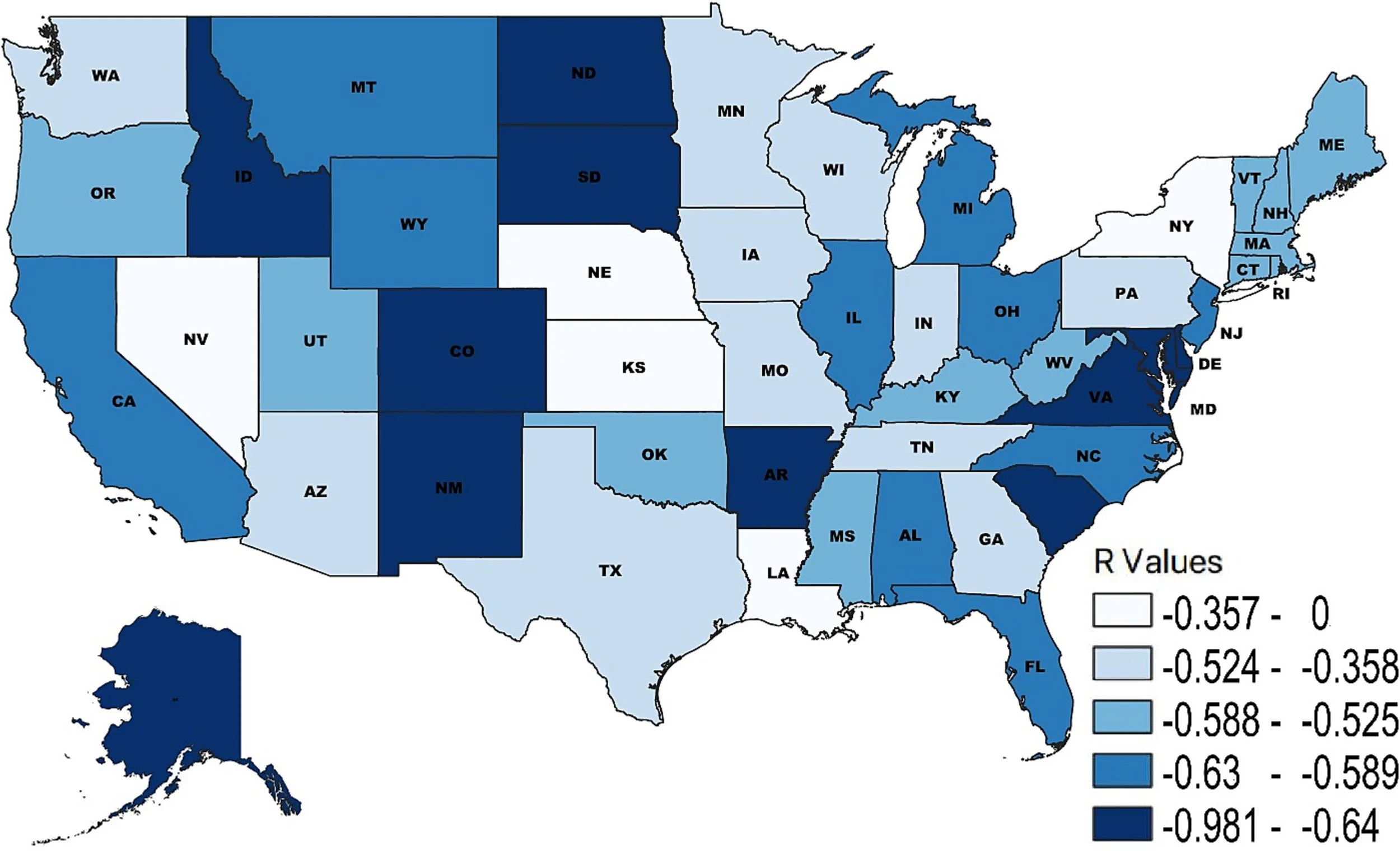
The R values, which are a measure of the strength of the linear relationship between variables, for each state in 2025, show that in nearly every state, there exists a statistically significant correlation between higher rates of sleep insufficiency and lower overall life expectancies at the county level.
While this trend was generally statistically significant nationwide, it was not statistically significant in a few states during certain years. However, this can be attributed to the fact that some states, such as Connecticut and Hawaii, have very few counties, meaning that they don’t have as many data points. This is an issue in the county-to-state significance model the researchers were using, so the relationship may still hold in those states anyway. Regardless, the overall national trend remained extremely striking. While correlation does not equal causation, such a significant correlation across such a massive population level supports the possibility of an underlying relationship.
The study’s conclusion has a serious implication for the way that American culture is oriented. Approximately 37% of adults are sleep deprived according to CDC data, and so, if insufficient sleep is associated with shorter lives, there exists a major public health crisis that is going unmentioned. The study showed that sleep had a correlation with lower life expectancy similar in strength to that of many other commonly recognized health issues, such as diabetes.
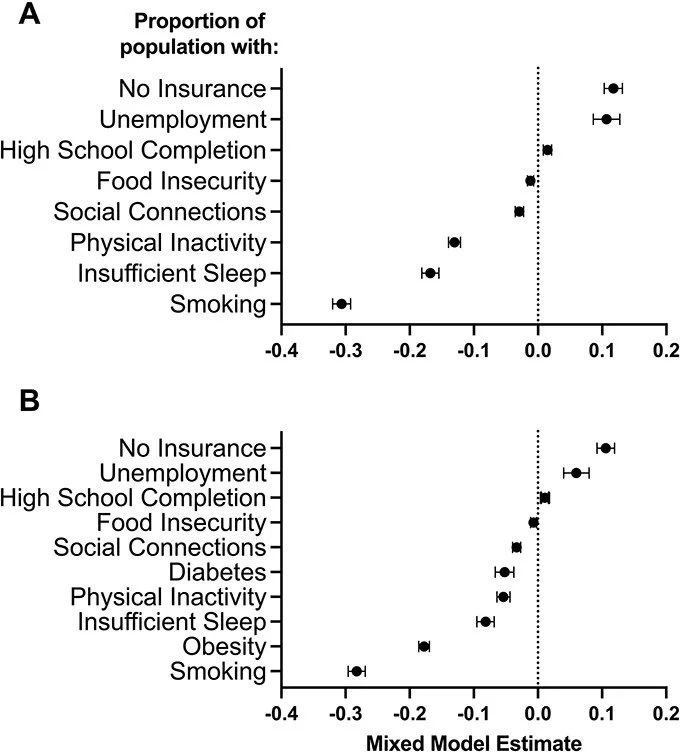
When compared to other factors that are known to significantly negatively impact life expectancy, only smoking and obesity had stronger negative correlations than sleep insufficiency.
However, while much attention is paid to other factors like smoking and physical inactivity, sleep insufficiency has gone under the radar as a health priority. American culture often promotes long working hours, extreme academic commitment, and constant online connectivity, all of which cut into the amount of sleep one gets. This is especially true for students at Gilman, where mind, body, and spirit are expected to live up to the value of excellence. Yet the research suggests that sleep is not a luxury to be sacrificed for academic or extracurricular success but rather a biological necessity. While the study did not delve into the specific reasons why sleep deprivation harms health, the long-term correlation with lower life expectancies is an urgent message to reorganize America’s cultural priorities by recognizing this deadly connection.