
How Diet and Exercise Are Impacting Your Mental Health

Image from Unsplash
What if improving your mental health started not with your mind, but with your habits? Recent research into mental health suggests that physical and biological factors, such as diet and exercise, have a significant impact on emotional well-being. A new study published in the Brain Medicine journal explored how these lifestyle influences interact with each other to affect brain function and health. Given rising rates of depression and anxiety globally, understanding the relationship between diet, exercise, and mental health is especially important.
The study was conducted by Nota et al., a team of seven researchers from University College Cork in Ireland, and was published on October 21, 2025. The researchers were interested in studying the relationship between diet types, exercise levels, and mental health markers. This is part of a growing wave of research into the correlation between biological factors and mental health. By focusing on physical influences, the team aimed to discover whether diet or exercise plays a more dominant role in influencing mental health.
The purpose of the experiment was to compare the effects of different diets and exercise levels on different markers of mental health. This was done by creating four different groups of nine-week-old, male, Sprague-Dawley rats split by two independent variables of diet and exercise. The rat’s diet consisted of either standard chow or the cafeteria diet, which mimicked the Western diet. The Western diet was high in processed foods, saturated fats, and sugars, all of which are deemed generally unhealthy. The rats were further subdivided by their level of exercise, with some given access to running wheels that allowed them to participate in voluntary exercise.
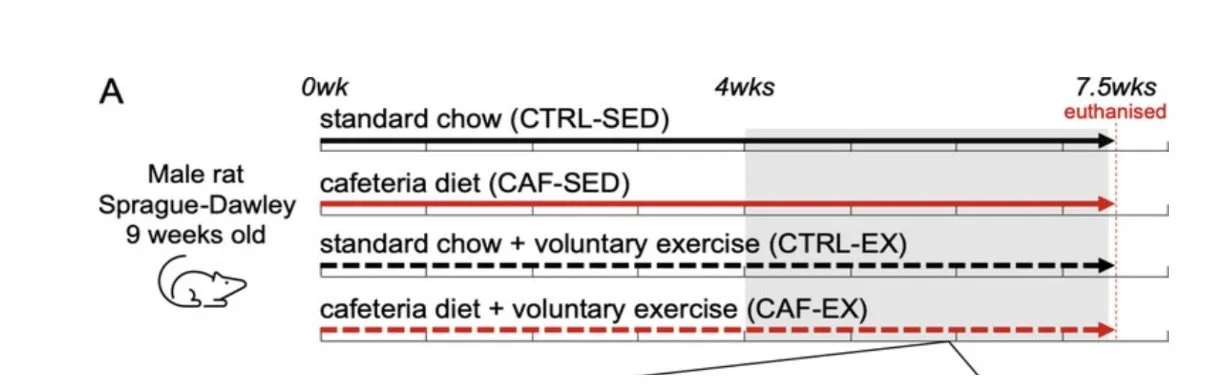
The rats were divided into four groups that ate standard or cafeteria diets and were sedentary or active.
Four weeks after the rats were delineated, the researchers conducted a series of tests to gather data on common markers associated with depression and generally poor mental health.
The results revealed a surprising pattern; exercise was not enough to fully counteract the negative effects of the Western, cafeteria diet. Consistently, across many different tests of mental health, the rats on the cafeteria diet underperformed the rats on the standard diet, regardless of level of exercise. For example, on the forced swim test, the rats on the standard diet displayed less immobility and more swimming than those on the cafeteria diet. Forced swim tests consist of dropping a rat into water and seeing how long it will swim before giving up.
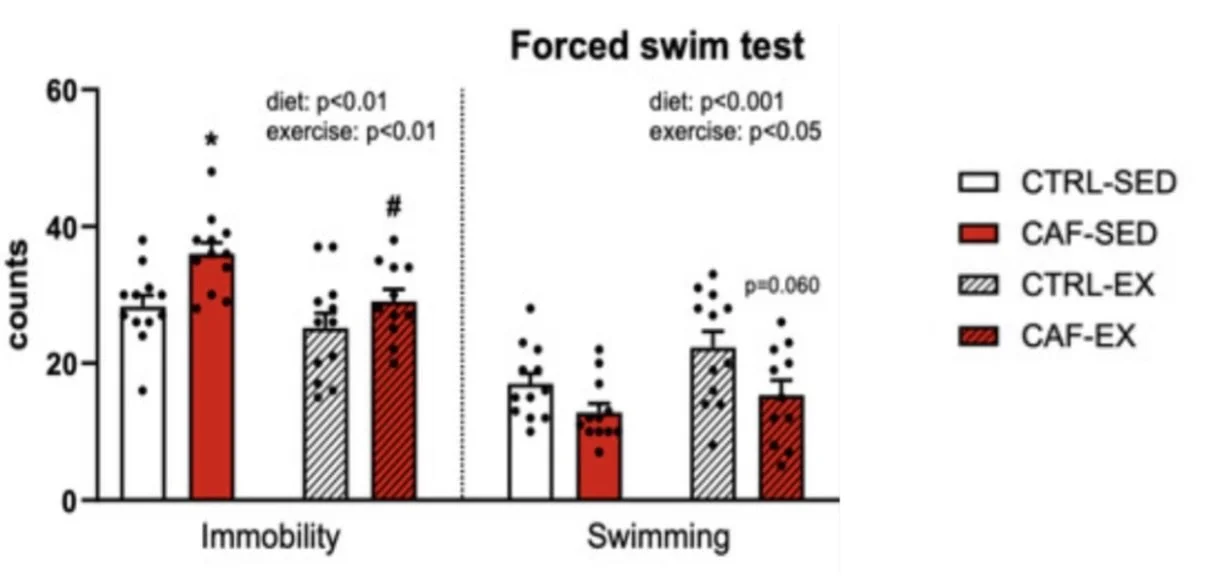
Rats on the standard chow outperformed those on the cafeteria diet, and exercising rats outperformed those who were sedentary, albeit with a slightly higher, yet still significant, p-value.
This is a good metric for determining despair, as those with weaker mental fortitude will be onset with immobility earlier and swim less. The results of this test demonstrate how unhealthy eating habits are the primary determinant of poor mental health markers, as exercise was not able to fully counterbalance these negative dietary effects.
While diet appeared to be the primary factor, exercise also plays an important secondary role. Physical activity helped mitigate some of the negative consequences associated with the poor Western diet, and the exercising groups consistently outperformed their sedentary counterparts. This was seen in the results of measured hippocampal neurogenesis among the different groups. Hippocampal neurogenesis is the creation of neurons in the hippocampus, which is often considered the memory hub of the brain. This test is not only a measure of literal brain health but is also a common biological marker of mental health, as those with poor mental health often exhibit less neurogenesis.
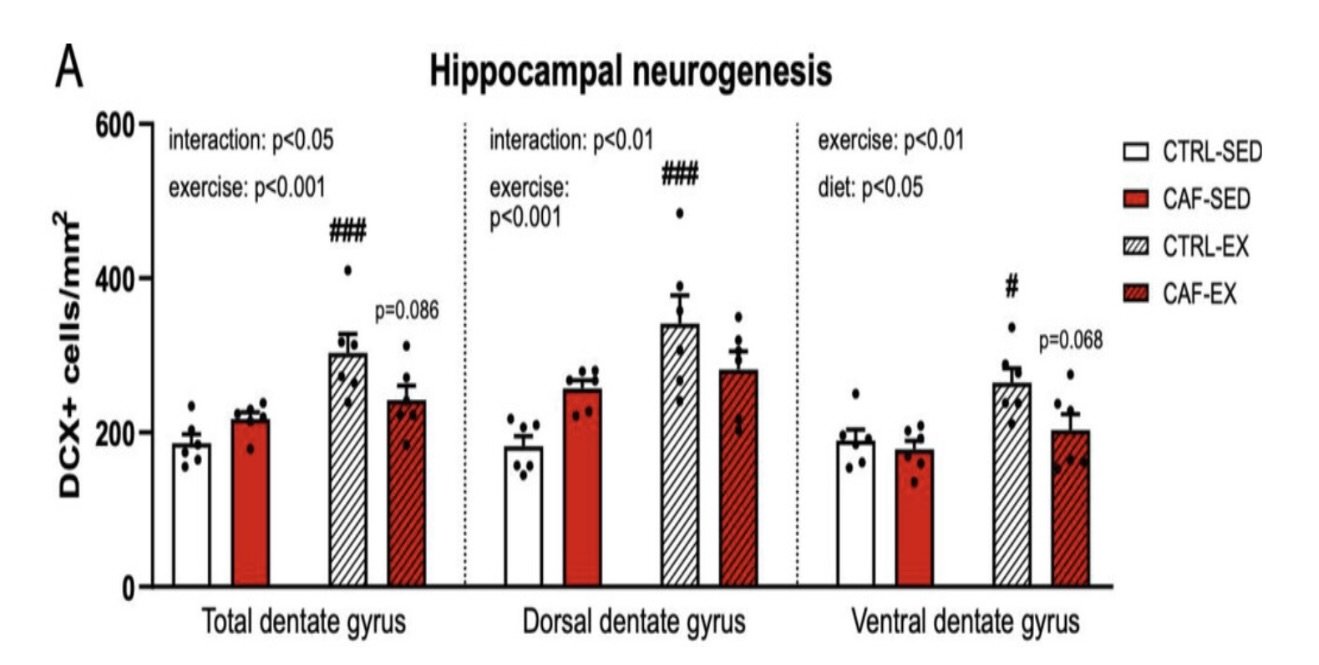
The difference in results between the sedentary and exercise groups were most evident in this test, where the creation of new neurons in the hippocampus was measured in three different regions.
This test revealed that exercise and diet are in what the researchers described as a “metabolic tug of war,” in which both can exhibit conflicting positive and negative biological influences on the brain. While exercise was shown to have a steady positive correlation with positive markers of mental health, it was not able to completely counteract the harmful effects of the Western diet. Exercise essentially acted as a buffer, which helped reduce negative trends, but it is not a cure for a poor diet.
The study concluded that overall diet is the principal driver of mental health outcomes when compared to exercise, with exercise still playing a relevant yet secondary role. The two are very important, but their roles are both different and not equal. These findings have significant implications for public health, especially in a nation like the US, where the Western diet is super prevalent. With 47.8 million Americans experiencing depression, this research shows that possible intervention in root factors such as diet might be fruitful in alleviating the current mental health crisis. Exercise can also serve as a stopgap measure, as it is extremely actionable and would take less time to change compared to structural food systems. However, the overall most important finding of the study is the reinforcement of the idea that mental health is intrinsically connected to biological realities. Diet and exercise are not only lifestyle choices that impact physical health but are also fundamental determinants of mental well-being.