
Can AI Predict a Market Crash?
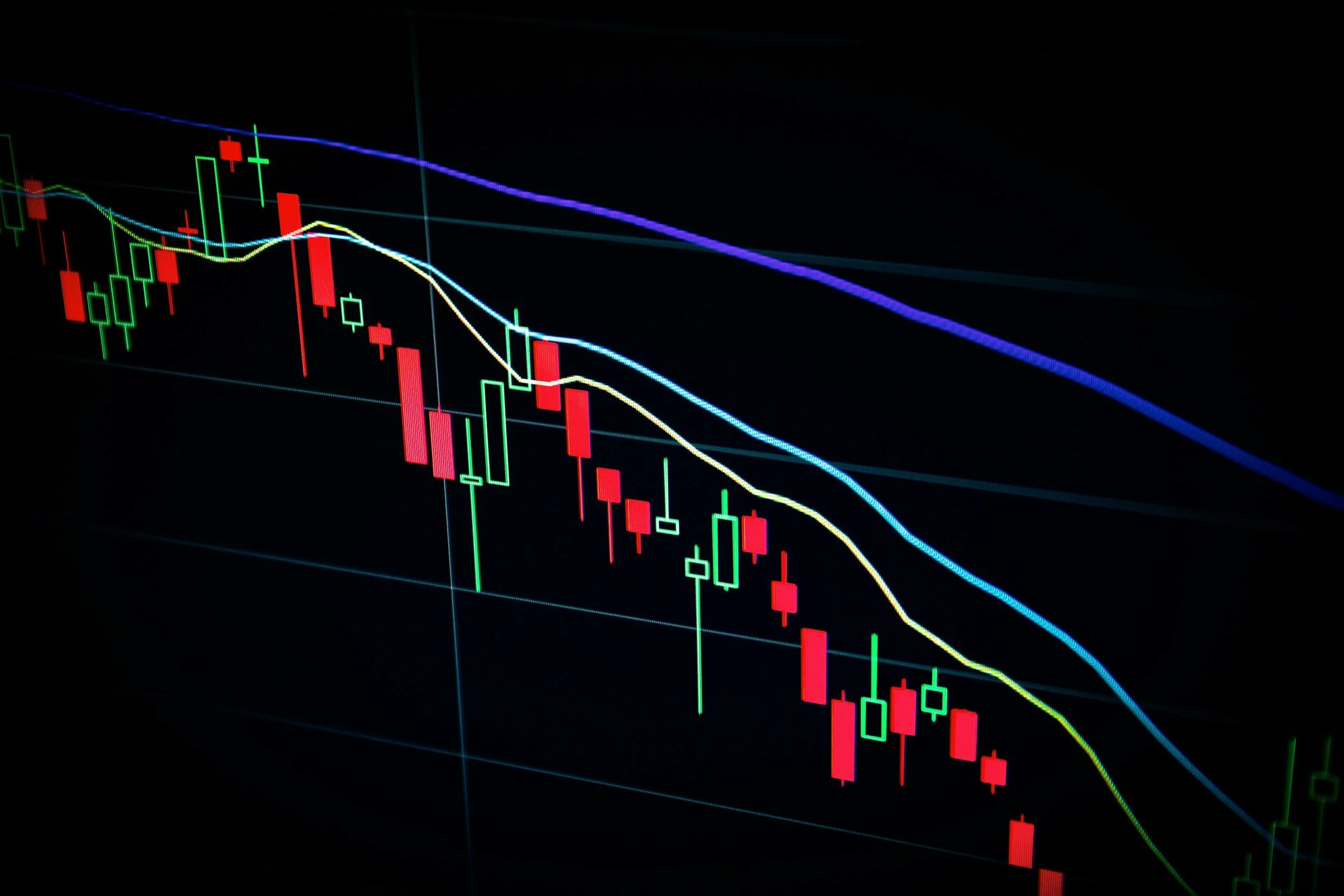
Image from Unsplash
One of the biggest questions in modern finance is whether artificial intelligence can predict a market crash. Investors, governments, and researchers worldwide have spent billions on data-driven systems to achieve this goal. Despite rapid advances in machine learning, computational power, and substantial funding for AI, predicting market crashes remains one of the most complex problems in economics.
In finance, artificial intelligence typically refers to machine learning systems that identify patterns in large datasets rather than systems with the “true reasoning” capabilities that humans have. These systems are trained on historical financial data, such as stock prices, interest rates, macroeconomic indicators, and even data from online media. Major financial institutions already use these tools to manage risk, guide investment decisions, and automate parts of their trading strategies. Given the level of AI’s involvement in the finance world already, it seems reasonable to think that AI can detect market collapses before they happen.
But market crashes are a little different than what AI is used to dealing with, as they aren’t merely just movements in stock prices. Periods of financial stress have repeatedly shown how instability can spread undetected through the banking systems and markets, affecting employment, investment, and economic confidence.
During the COVID-19 pandemic, financial markets experienced extreme volatility as governments and central banks responded to sudden economic shutdowns, illustrating how unexpected events can overwhelm even the most advanced financial systems. Even smaller downturns can affect tuition affordability, job availability, and long-term financial planning, which is why the possibility of predicting crashes in advance is so appealing. Artificial intelligence performs best in financial applications that involve large amounts of historical data, relatively stable patterns, and clear feedback on success or failure. That’s why machine learning systems are effective at fraud detection, credit scoring, and automated trading under well-defined rules. In these areas, data on past behavior provides the AI with helpful information for predicting future outcomes. Market crashes, however, do not follow any sort of stable or repeatable patterns.
One obstacle to predicting crashes is that financial markets are reflexive systems. In a reflexive system, beliefs about the future influence present behavior in ways that, in turn, change the future itself. In other words, if you know the future, you’ll change what happens by trying to avoid it. If an AI system were to predict a crash with confidence and that prediction became widely trusted, investors would act by selling assets or reducing their risk exposure. These actions, in themselves, alter market conditions and could cause the crash to occur sooner, prevent it entirely, or change its form. This feedback loop makes precise prediction inherently unstable in the markets.
Another obstacle is that rare and unexpected events trigger many crashes. Sudden financial disruptions, geopolitical shocks, or global crises can rapidly shift market behavior in ways that models trained on historical data can’t anticipate. Because machine learning systems rely on past information and historical patterns, they struggle when faced with events that haven’t happened before. Even when historical patterns exist, AI systems face a deeper problem: distinguishing correlation from causation. People design these models to identify statistical relationships, not to explain the underlying reasons for those relationships. For example, a model might learn that rising volatility often precedes market stress, but volatility itself does not cause crashes. Market collapses arise from complex interactions among human psychology, leverage, liquidity constraints, and broader economic conditions. These interactions are nonlinear and context-dependent; the context makes them difficult to model accurately.
Despite these limitations, AI still plays a significant role in modern finance. Rather than trying to predict the precise timing of a market crash, AI can more accurately identify rising risk and abnormal market behavior. Additionally, it can stress-test financial systems under extreme scenarios. Financial regulators and central banks use AI in these ways to enhance their preparedness for market crises and broader oversight.
Ultimately, human judgment remains necessary because uniquely human factors such as emotions, narratives, and trust continue to shape markets. Research and financial regulators have highlighted how economic narratives can shape investors' perceptions of risk, particularly regarding crash-related fears. Both fear and confidence can spread through markets faster than data alone can explain. Furthermore, AI systems lack intuition, ethical reasoning, and accountability, all of which are important when financial decisions can affect millions of people.
For a student at Gilman School, market crashes may seem very far away, something that happens outside these walls and impacts other people, but their consequences are real. College endowments, financial aid budgets, and job markets are among the areas that depend on economic stability. Emerging technologies will shape our future and the opportunities available. More than that, this topic serves to illuminate a broader lesson applicable to students interested in STEM or finance: just because you have powerful tools, it does not mean you eliminate uncertainty. Understanding the limitations of our technology is as vital as learning to use it.
AI will continue to transform finance by improving efficiency, supporting risk management, and revealing overlooked patterns. However, this will not prevent market crashes from occurring, nor will it eliminate uncertainty. Financial markets are complex phenomena influenced by human behavior; therefore, they are not easy to predict.
Although AI can highlight areas of risk and thus improve decision-making, it cannot provide a complete view. The biggest challenge is not creating machines that can foresee the future with certainty, but instead designing systems that integrate data with judgment, speed with caution, and innovation with responsibility, for students preparing to live in a world where algorithms will have a significant influence. Finding that balance may be the most important lesson.
