
Loops & Bends: Carotid Artery Tortuosity as a Marker for Ischemic Stroke
Photo by Kjpargeter
2 million brain cell deaths a minute. That’s the devastating impact of stroke, a medical condition that occurs when blood flow to the brain is interrupted. In particular, ischemic stroke occurs when an artery leading to the brain, typically a carotid artery, is blocked, which can cause life-threatening issues in the brain and the overall body. Nearly 800,000 Americans are affected by stroke each year, with ischemic stroke accounting for 87% of those cases. Moreover, strokes are becoming increasingly common in young people aged 18-44. A study conducted by Johns Hopkins University researchers of the Neurovascular Laboratory and Radiology Department examined the carotid artery to see if its tortuosity, the artery’s bending, twisting, and kinking, was linked to ischemic stroke. A few high school students (including myself) assisted with data analysis over the summer of 2024. The study was submitted and accepted to the International Stroke Conference 2025 and has considerable implications for the future of stroke diagnosis.
The study analyzed MRA datasets (MRA is a type of MRI that focuses on blood vessels) from participants in the Atherosclerosis Risk in Communities (ARIC) study, a large-scale study conducted across various communities in the United States, to gain a deeper understanding of heart disease and stroke. Johns Hopkins scientists and student interns used LAVA software to analyze the data, identifying the carotid artery and categorizing it as regular, loop, or kink-shaped (see figure below). The association between artery tortuosity and ischemic stroke was evaluated using Cox regression models that measure the survival probability of the different tortuosity types adjusted for demographic factors (see Cox regression below). Ultimately, researchers discovered that both loop and kink shapes are irregular and are associated with ischemic stroke.
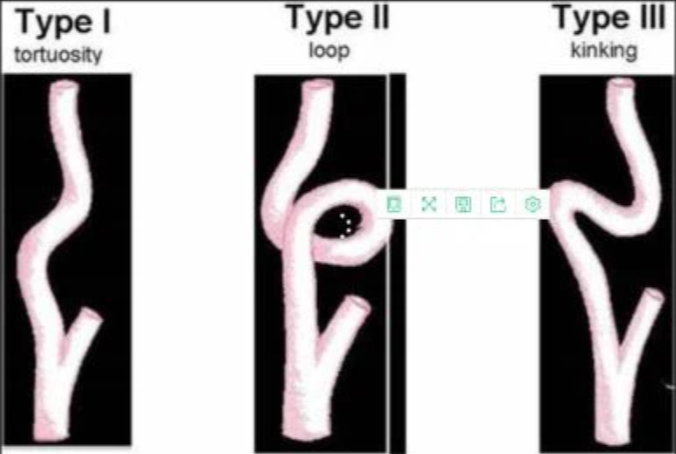
The 3 types of carotid artery tortuosity are shown above. Type I tortuosity includes slight bends and is regular. The Type II Loop features a full 360-degree loop. Type III kinking typically involves one or more parts of the artery with a sharp turn, creating a “V” shape.
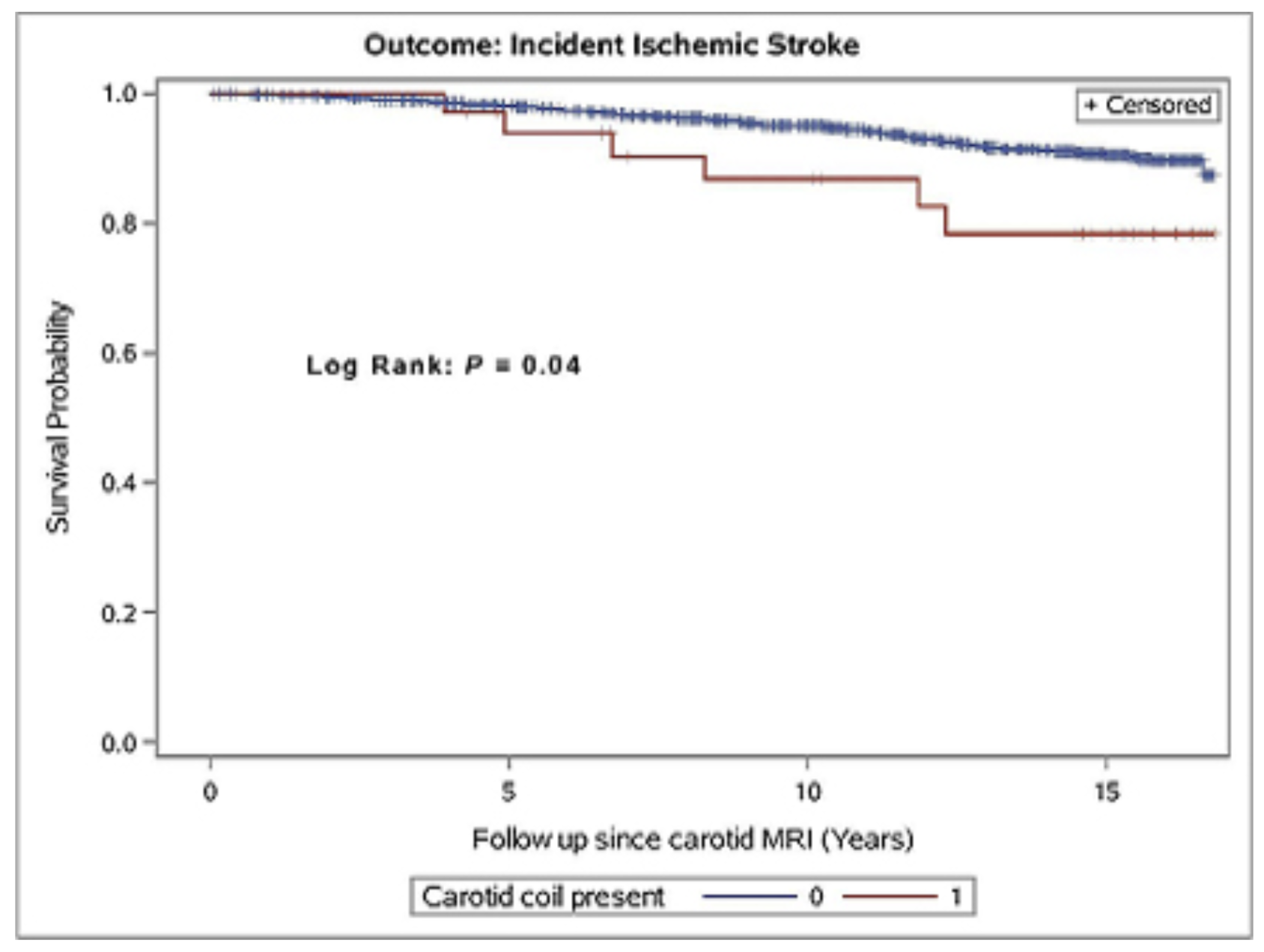
The Cox regression model shows survival probability as a function of the number of years since the MRI was performed. The regression accounted for additional factors that might affect the survival probability, including age, sex, and race, thereby ensuring that carotid tortuosity is the only variable influencing the results. The red line (1) represents either a loop or a kink-shaped carotid artery, while the blue line (0) represents normal tortuosity. Examining the graph, the survival probability of patients with irregular carotid coils declined more rapidly over time than that of patients with regular coils. A p-value of 0.04 (4%) in this study indicates that the results are statistically significant and unlikely to be due to random chance.
From the Cox regression model, a link is revealed between ischemic stroke and carotid artery tortuosity. Therefore, carotid artery tortuosity can serve as a visual sign of ischemic stroke. Globally, misdiagnosis is a major cause of stroke cases. Finding ways to improve diagnostic accuracy and efficiency, as this study did, could significantly improve the lives of millions of people. In the future, scientists may develop methods to implement artificial intelligence (AI) in reading MRAs. Currently, all MRA analysis is performed manually, which can be time-consuming. AI could potentially enhance the efficiency of this process while maintaining high accuracy. Concerningly, stroke rates have increased in young adults. As screens start to take over our lives, obesity and physical inactivity become the primary contributors to the trend. This is especially important for Gilman students. As we near adulthood, the value of a healthy lifestyle, including regular exercise and good food choices, becomes increasingly important.